
Share this post
By Nikki D’ Agostino – Managing Director, Rezzi Strata
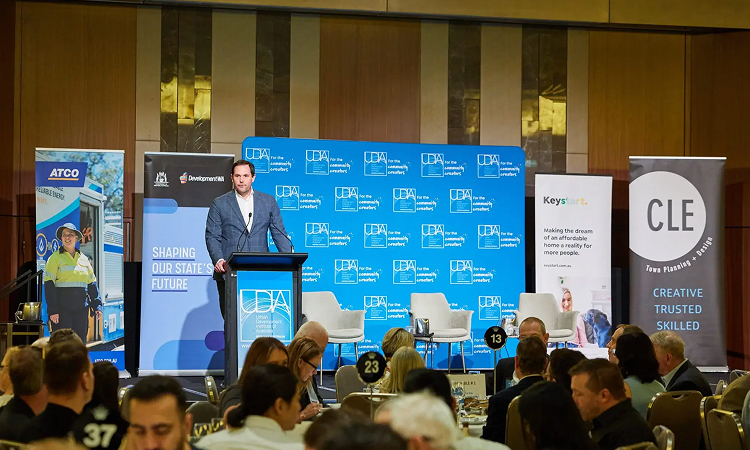
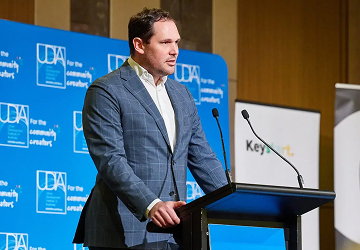
I attended the UDIA WA Housing Market Insights Lunch last week, and one theme kept surfacing in different ways throughout the discussion.
The housing market isn’t weakening.
But it is becoming more complex.
Demand is still strong. Population growth is still driving need. But affordability, construction constraints, and feasibility pressures are reshaping what actually gets built — and who it is built for.
For those of us working in strata and development, this shift matters. Because increasingly, the housing conversation is not just about houses. It’s about communities, density, and long-term stewardship of buildings.
Here are five observations that stood out to me.

1. The Market Is Strong, But It’s Moving Into a More Disciplined Phase
Perth values have grown rapidly over the past five years, and the fundamentals remain solid. But growth is beginning to moderate as interest rates, serviceability, and cost of living pressures filter through.
This isn’t a collapse. It’s a normalisation.
What changes in this phase is behaviour.
Developers become more selective.
Buyers become more cautious.
Projects need to stack up properly, not just ride momentum.
That tends to produce better outcomes in the long run.
2. Affordability Is Now the System Constraint
Affordability isn’t just a talking point anymore. It is shaping who can participate in the market at all.
First home buyers are increasingly squeezed, and the gap between income growth and housing costs continues to widen.
This is where the conversation around density becomes unavoidable.
Apartments, townhouses, and well-designed strata communities are no longer secondary housing forms. They are becoming essential to keeping cities functional.
The challenge isn’t whether density will increase.
It’s whether we design and manage it well.
3. Supply Is Recovering, But the Industry Is Still Under Strain
Approvals and commencements are improving, but the structural constraints remain clear:
- Labour shortages
- Infrastructure bottlenecks
- High construction costs
- Feasibility pressure
One of the more interesting points raised was that construction costs are unlikely to fall meaningfully. The focus instead needs to shift to productivity, delivery models, and smarter project execution.
This is where innovation in construction methods and project coordination will become increasingly important.
And it’s also where operational thinking — how buildings are run after completion — needs to be part of the conversation earlier, not later.
4. Western Australia Is Still Early in the Density Shift
Compared to the eastern states, WA is still transitioning toward medium and high-density housing.
But the underlying pressures are the same:
- Population growth
- Land constraints
- Infrastructure cost
- Urban sprawl limits
Density isn’t a planning theory anymore. It’s an economic necessity.
And this is where strata plays a much bigger role than people often realise.
Because when density increases, the long-term performance of those communities depends on governance, maintenance, financial planning, and management quality. Those things are not abstract. They directly shape people’s daily lives.
Strata isn’t just administration.
It’s asset stewardship.
5. The Next Housing Cycle Will Be Shaped by Policy and People
Several macro forces are converging at once:
- Migration settings
- Infrastructure investment
- Investor lending conditions
- Tax policy
- Construction sector capacity
Investor participation remains a major driver of rental supply, and any tightening of credit in that segment could have immediate effects on vacancy rates and rents.
At the same time, regional markets are continuing to attract migration, showing that lifestyle and affordability are becoming just as influential as proximity to CBDs.
Housing outcomes today are the result of many moving parts interacting, not one single driver.

A Personal Reflection
What struck me most walking away from the lunch wasn’t any single statistic.
It was the sense that housing is moving into a more mature phase as an industry.
We are no longer just building dwellings.
We are building communities that need to function for decades.
That requires better planning, better delivery, and better long-term management.
And increasingly, it requires strata to be part of the conversation earlier — not as an afterthought once the keys are handed over, but as part of how developments are designed and delivered from the beginning.
Because the real test of a building isn’t how it looks on completion day.
It’s how it performs five, ten, and twenty years later.